




Wynd Cottage, Whitby Historic Building Conclusion +
This is the 3rd part of the report of the Historical Building Assesment we had carried out in 2023. The Assement was carried out by Dr James Wright FSA of Triskele Heritage. We can highly recomend the services he offers. After many years trying to figure out when Wynd cottage was built and modified we decided to call in the best expert we could find. This page contains his conclusionsis his conclusions plus other information include in the report.
The full PDF of the Report is available to download here 
For ease of navigation report is split over three web pages, the photos, illustrations and maps etc. are in with the text.
3. Conclusions + (this page)
Conclusions, List of Illustrations References, Bibliography, Website, Author Credentials, Acknowledgements, Statement of Indemnity
Conclusions
Wynd Cottage exhibits evidence for at least two principal phases of construction. It is possible that, in its initial form, the property was much larger and also included the stone range to the north to form a single unit. The northern elevation (now within the alleyway) may be infill from when the property was subdivided. If this was the case, then the relict roof truss may have survived from this much larger house. However, by the later eighteenth century the boundaries of the present property were in effect, which created a simple one storey with attic stone structure that had a housebody at ground floor and a bedchamber at first floor. The housebody may have been accessed from the east via the alley. The latter was possibly a through passage into the yard at this period, with the dogleg created during the eighteenth-century remodelling. The housebody was supplied with an inglenook fireplace which may have had a timber-framed firehood. The upper floor was accessed via a stepped ladder which was in the approximate position of the modern stair. One principal truss of the roof structure from this phase of the building survives against the north elevation. There is some evidence that its design was informed by the cruck tradition in vernacular architecture.
The dating evidence for this primary phase at Wynd Cottage is slight. Cartography indicates that there was a structure on the site by c 1740 and there is no particular reason to doubt that this was in-situ the stone building. The presence of a firehood would be consistent with a building of the seventeenth century. Equally, the hint of cruck carpentry, within the form of the relict roof truss, might speak of a period before the later seventeenth century by which time that tradition had largely disappeared from Yorkshire (Alcock and Roberts 2019, 178). Therefore, it is proposed that the origins of the building may lie within the seventeenth century.
The cottage was extensively reorganised during the eighteenth century. This involved the insertion of a brick chimney stack against the south elevation to replace the firehood. Likely at the same time, the level of the first-floor frame was reduced slightly, and a new staircase was built. This work was complemented by the heightening of the western eaves level and the possible rebuilding of the east elevation in brickwork. The northern roof truss, from the first phase of construction, was retained in-situ whilst a new common rafter roof, supported on two rows of purlins, was built. This work transformed Wynd Cottage into a two storey with attic building.
There is slightly more physical dating evidence for the remodelling of the building. Firstly, it has been noted above that firehoods were generally rebuilt in masonry during that century. The design of the first floor four-panel doors would not be expected before the later eighteenth century, whereas the use of butterfly hinges went out of fashion by the early nineteenth century. Finally, if original, the floorboards visible in the bathroom are also consistent with a date in this period. The present close-boarded room divisions are possibly contemporary with this reorganisation. It therefore seems likely that the property was extensively remodelled during the later eighteenth century.
The property has been sensitively conserved by the present landowners which means that the archaeological phasing is still perfectly legible within the fabric. Although the original form of Wynd Cottage has been substantially reorganised, the later eighteenth century appearance of the property has survived substantially intact. This is remarkable enough in itself, but the presence of the relict roof truss and reused timbers from marine vessels are particularly surprising.
The survival of the roof truss is unusual on two levels. Firstly, on a practical level, such framing would ordinarily be broken up and removed. Quite why it was retained, without obvious function, is a moot point. Secondly, it has a design that is uncommon. Although ostensibly a principal rafter form, there are certain elements which point towards a fusion with the cruck framed style, which is a significant feature.
Equally important is the observation of four reused marine timbers within the house. Inaccurate statements that historic buildings were part-constructed from “ship’s timbers” are ubiquitous, but to uncover authenticated evidence that a property does indeed contain timbers which derive from a boat or ship is very rare. However, the presence of marine timbers is entirely appropriate for a property which is so intimately tied to the sea through the nearby presence of Whitby Harbour, which is fittingly intervisible with Wynd Cottage.
Table of Figures
Figure 2 West elevation of Wynd Cottage, looking north-east
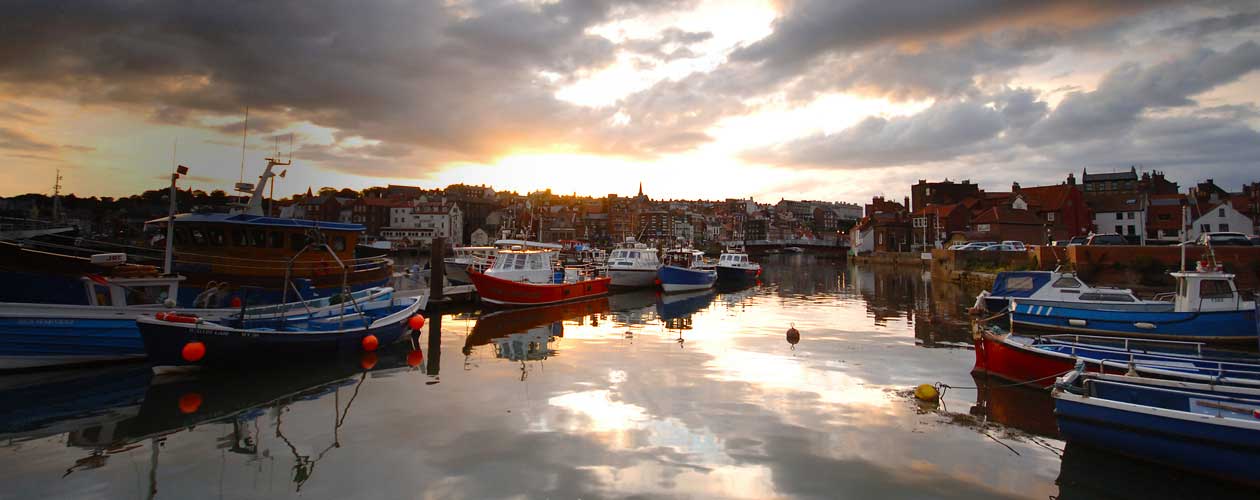
Figure 3 View of Whitby Harbour from Wynd Cottage, looking east
Figure 4 East elevation of Wynd Cottage (the pale yellow building, in the centre of the image, located directly above The Pier public house), set in its wider landscape context, looking west from St Mary’s churchyard
Figure 5 Ground floor plan (Picture Source: Andy Bell)
Figure 6 First floor plan (Picture Source: Andy Bell)
Figure 7 Sectional elevation of the property, looking north (Picture Source: Andy Bell)
Figure 8 Sectional elevation of the property, looking south (Picture Source: Andy Bell)
Figure 9 Interpretive map of Whitby in 1540, the approximate site of Wynd Cottage is marked in red (Picture Source: Atkinson 1894)
Figure 10 Detail from John Wooler’s plan of the Town and Harbour of Whitby, c 1740, (Picture Source: Whitby Civic Society)
Figure 11 Detail from Lionel Charlton’s plan of the Town and Harbour of Whitby, 1778 (Picture Source: Whitby Civic Society)
Figure 12 West elevation of Wynd Cottage and the brick-built 44 Cliff Street to the south, looking south-east
Figure 13 Detail from John Wood’s plan of Whitby and Environs, 1828 (Picture Source: Whitby Civic Society)
Figure 14 Detail from map of 1845 (Picture Source: Andy Bell)
Figure 15 Detail from Ordnance Survey map: Yorkshire XXXII.7.2, surveyed 1891, published 1893 (Picture Source: National Library of Scotland)
Figure 16 Detail from plan of the 1920s (Picture Source: Andy Bell)
Figure 17 Detail from Ordnance Survey map: Yorkshire XXXII.7, revised 1938, published 1945 (Picture Source: National Library of Scotland)
Figure 18 The alleyway to the north of the cottage, looking east
Figure 19 Northern door jamb of the main doorway, looking north-east
Figure 20 East elevation of Wynd Cottage, looking west
Figure 21 Dining room, looking south-east
Figure 22 Dining room, looking north-west
Figure 23 Detail of the blocked kitchen door hinge (Picture Source: Andy Bell)
Figure 24 Stair hall, looking east
Figure 25 Detail of the under-stair cupboard showing the timber support for the in-situ stair (left) and a relict notched timber which may have once held a ladder which could have been the original access to the first floor, looking north-west
Figure 26 Stair well, looking south-west, note the relict joist ledge
Figure 27 Living room, looking north-east
Figure 28 First floor bedroom, looking north-west, note the relict principal truss and spur
Figure 29 Bathroom, looking east, note the relict principal rafter, spur and tie beam
Figure 30 Door between the stairs and living room, looking south
Figure 31 Detail of a “ghost” of a butterfly hinge on the door between the stair and living room, looking south
Figure 32 Cupboard doors in the first-floor stair lobby, looking north, note the butterfly hinges
Figure 33 Living room, looking south-west
Figure 34 Second floor eastern bedroom (left) and landing (right), looking south, note the rebated masonry of the former roof structure
Figure 35 Second floor north bedroom, looking north, note the relict roof truss
Figure 36 East spur of the relict roof truss, looking north
Figure 37 Detail of the yoke of the relict roof truss, looking north
Figure 38 Parts of a cruck truss, illustrated using a cruck from Normanton-on-Soar, Nottinghamshire (Picture Source: Miles, 2019, 23, Fig. 2.5)
Figure 39 “Type C” cruck apex and its distribution (Picture Sources: Miles, 2019, 34, 36, Figs. 2.18 and 2.19)
Figure 40 Reused futtock in the alleyway, looking east
Figure 41 Futtock reused as the lintel of the back door, looking east
Figure 42 Futtock reused as a bracket in the fireplace, looking south
Figure 43 Futtock reused as a collar in the relict roof structure, looking north-west
Figure 44 Annotated diagram of the timbers of British ships dated c 1650-1710 (Picture Source: modelshipworld.com)
Figure 45 Futtock reused a door lintel at 45a Cliff Street (Picture Source: Andy Bell)
References
Bibliography
Alcock, N. and Roberts, M., 2019, ‘Crucks in the North East and Yorkshire’ in Alcock, N., Barnwell, P. S., and Cherry, M., Cruck Building: A Survey. Shaun Tyas. Donington.
Atkinson, D., 2007, Shipbuilding and Timber Management in the Royal Dockyards 1750-1850: An Archaeological Investigation of Timber Marks. University of St Andrews. Unpublished doctoral thesis.
Atkinson, J. C., 1894, Memorials of Old Whitby or Historical Gleanings from Ancient Whitby Records. Macmillan. London and New York.
Barker, R., 2011, The Rise of the Early Modern Shipping Industry: Whitby’s Golden Fleet, 1600-1750. Boydell Press. Woodbridge.
Brunskill, R. W., 1985 (2007 edition), Timber Building in Britain. Yales University Press. New Haven and London.
Giles, C., 1986, Rural Houses of West Yorkshire, 1400-1830. Royal Commission on the Historical Monuments of England. London.
Hall, L., 2005, Period House Fixtures and Fittings, 1300-1900. Countryside Books. Newbury.
Historic England, 2016, Understanding Historic Buildings. Historic England. London.
Jones, S. J., 1982, A Maritime History of the Port of Whitby, 1700-1914. University of London. Unpublished doctoral thesis. Lucas, R., 1994, ‘Ships‘ Timbers: Some Historical Evidence from Norfolk for Their Use’ in Vernacular Architecture Vol. 25.
Miles, D., 2019, ‘The ‘Nuts and Bolts of Cruck Construction’ in Alcock, N., Barnwell, P. S., and Cherry, M., Cruck Building: A Survey. Shaun Tyas. Donington.
Moir, A, 2003, Tree-ring Analysis of Timbers from Waxham Great Barn, Sea Palling, Norfolk. Unpublished dendrochronology report. Tree-ring Services.
Pevsner, N., 2002, The Buildings of England: Yorkshire: The North Riding. Yale University Press. New Haven and London.
Powell, J., 2012, Strategic Stone Study: A Building Stone Atlas of North-east Yorkshire. English Heritage. Swindon.
Rackham. O., 1986 (1997 edition), The History of the Countryside. Phoenix Giant. London.
Young, G., 1824 (2nd edition, 1840), A Picture of Whitby and its Environs. Horne and Richardson. Whitby, Scarborough, and Stockton.
Websites
Mediaeval Mythbusting Blog #13: Ship Timbers https://triskeleheritage.triskelepublishing.com/mediaeval-mythbusting-blog-13-ship-timbers/ [Accessed 28/07/2023]
Model Ship World https://modelshipworld.com/uploads/monthly_2018_06/17thframes.jpg.448da7611f1cb73f9857238aa3c893fe.jpg [Accessed 29/07/2023]
[NHLE] National Heritage List for England https://historicengland.org.uk/listing/the-list/ [Accessed 27/07/2023]
[NYCCHER] North Yorkshire County Council Historic Environment Record https://www.heritagegateway.org.uk/gateway/chr/herdetail.aspx?crit=&ctid=92&id=4733 [Accessed 27/07/2023]
Whitby Civic Society: Whitby Maps https://www.whitbycivicsociety.org.uk/publications/whitby-maps/ [Accessed 27/07/2023]
Author Credentials
Dr James Wright FSA is a buildings archaeologist and architectural historian with both undergraduate and postgraduate qualifications in Archaeology from the University of Nottingham. He has specialised in the recording and analysis of historic buildings for over twenty years. He has operated as a consultant at Triskele Heritage since 2016.
Formerly, he worked as a Field Archaeologist at Trent & Peak Archaeology, Conservation Stonemason at Nottingham City Council / Mark Stafford Stonemasonry, Archaeological and Historic Buildings Assistant at Nottinghamshire County Council and Senior Archaeologist (Built Heritage) at Museum of London Archaeology.
He is a Fellow of the Society of Antiquaries of London, affiliate member of the Institute of Historic Building Conservation and serves on several heritage committees including the Council of the Thoroton Society of Nottinghamshire. In 2018, he was recognised for his work at the National Trust property Knole (Sevenoaks, Kent) with an award for Best Archaeological Project at the British Archaeological Awards.
Recent relevant projects on post-mediaeval vernacular buildings include work at Collingham (Nottinghamshire), Pershore (Worcestershire), Sible Hedingham (Essex), Haskayne (Lancashire) and Sheringham (Norfolk).
Acknowledgements
This report was written by Dr James Wright FSA of Triskele Heritage based on fieldwork carried out in May 2023. Dr Damian Goodburn kindly offered advice and comment on the reused marine timbers. The work was requested by Andy Bell, the landowner of the building and thanks must go to him for the commission and access to the property.
Statement of Indemnity
The evidence, statements and opinions contained within the text of this report are based entirely on the works undertaken for the project and are produced according to professional industry guidelines (Historic England 2016). No responsibility can be accepted by the author for any errors of fact or opinion arising because of data supplied by third parties.
3. Conclusions + (this page)
James Wright has also publish this report on his website "Wynd Cottage, Cliff Street, Whitby".
